InstallPros
I designed the InstallPros website from scratch, not as a visual exercise but as the answer to one question the support inbox kept asking: why do people hesitate before booking an installation?
- Role
- Product Designer
- Timeline
- 2024 - Present
- Scope
- Research, product decisions & web system (U.S.)
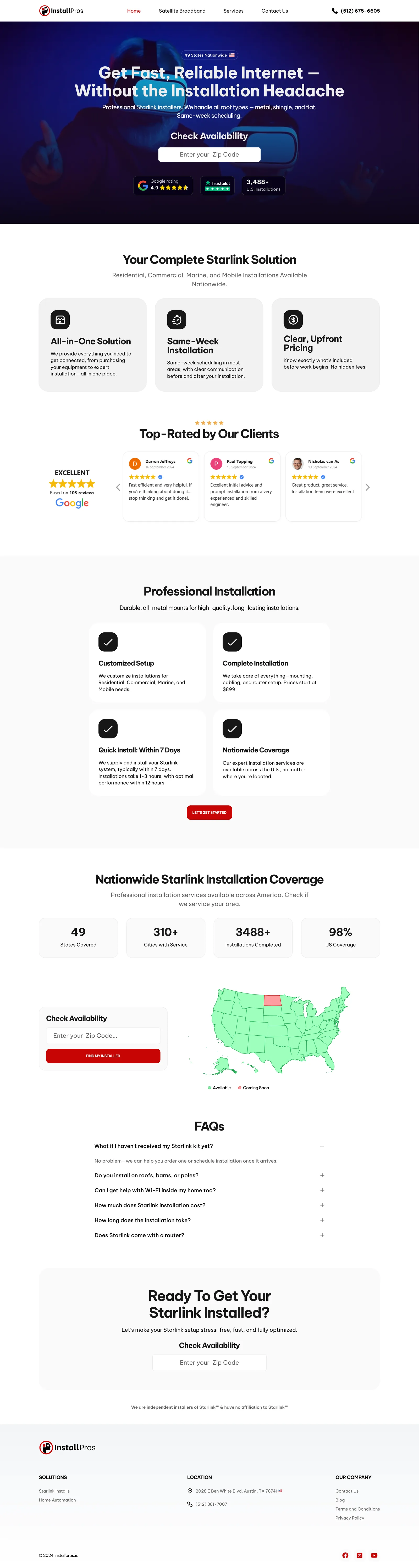
Project at a glance
The challenge
InstallPros could install Starlink anywhere, but visitors stalled before booking. The job was to find what created the hesitation and design it out, starting from evidence, not aesthetics.
My role
Sole Product Designer. I built a research workflow over 300+ support conversations, turned the patterns into product principles, and designed the site that acted on them.
The outcome
A website structured around certainty: availability, trust, and the next step are resolved in the order customers actually ask for them: before the form, not after.
The question
Why do people hesitate before booking an installation?
This wasn't a visual project. InstallPros could already install Starlink across the U.S., yet visitors stalled at the edge of booking. Rather than explore layouts, I started by trying to understand the hesitation and let the evidence decide what the site needed to be.
Research process
I turned the support inbox into a design brief.
The clearest signal of what customers were unsure about was already sitting in our conversations with them. I built a lightweight workflow to mine it.
Step 1
Export
Pulled 300+ Intercom conversations out of the support tool.
Step 2
Structure
Used a ChatGPT-assisted workflow to organize them into Google Sheets.
Step 3
Analyze
Tagged recurring questions and clustered them into recurring patterns.
Step 4
Translate
Turned each pattern into a concrete website decision.
That corpus became the foundation of the project. Three categories of question dominated everything else.
Payment
140 conversations
Schedule
95 conversations
Location
56 conversations
Quote
48 conversations
Tech support
30 conversations
Roof
17 conversations
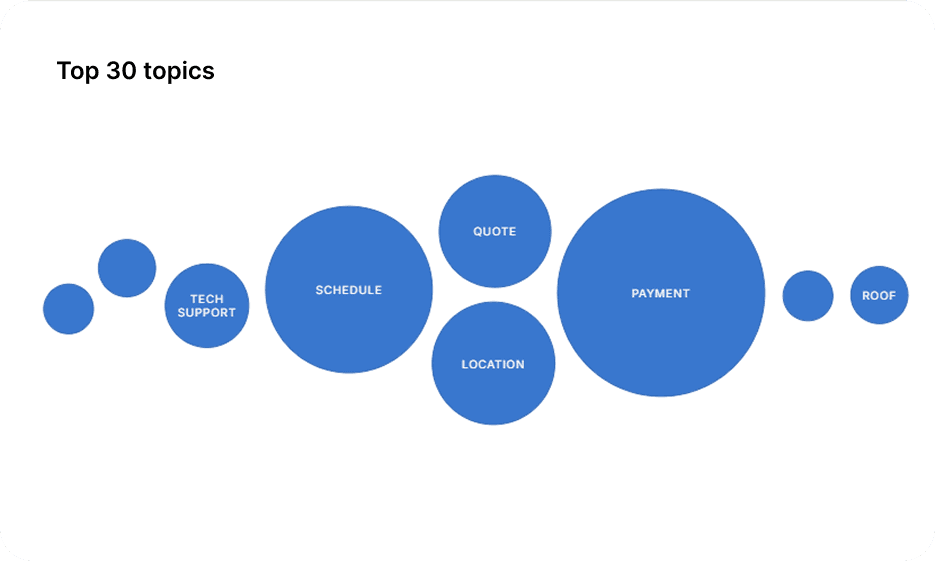
300+ customer conversations revealed recurring friction around pricing, scheduling, availability, and service coverage.
What customers were asking
Three questions, asked over and over.
Payment
- “How much does installation cost?”
- “Can I see pricing before I schedule?”
- “What are the payment options? Do you offer financing?”
- “Why do I have to book before I get a quote?”
The highest-volume category. People were hitting pricing uncertainty before they were ready to commit, and a hidden price reads as a risk, not a quote.
Availability
- “Do you serve my area? Do you install in my state?”
- “Can you install on a metal roof? On a boat?”
- “Will this actually work where I live?”
Availability is validated before scheduling. Customers first need confidence that InstallPros can help them at all. Coverage is the real first question.
Scheduling
- “How quickly can someone come out?”
- “What happens after I submit the form?”
- “How long does the installation take?”
People aren't chasing megabits. They're chasing fast resolution of a painful problem. The speed they care about is how quickly it gets handled.
Who we were designing for
Two people, one feeling: I need this handled.
The frustrated rural homeowner
Non-technical, risk-averse, tired of unreliable internet.
Wants reliability and someone to handle the whole thing, not a spec sheet.
The remote worker under pressure
Internet affects their income, so every day offline costs them.
Values responsiveness, speed, and certainty that the problem is being solved now.
What the research made clear
Four insights became the spine of the design.
Insight 01
Customers aren't buying internet. They're buying certainty.
The strongest pattern across conversations wasn't technical. It was uncertainty. People wanted to know who is coming, when, what it costs, whether their area is covered, and whether it will be done right. Reassurance was the product.
Insight 02
Availability comes before almost everything.
Before pricing, before features, before scheduling, the question was “Can you help me where I live?” Coverage confidence is the gate every other decision sits behind, so it had to be answered immediately.
Insight 03
Trust beats technical specifications.
People rarely asked about Mbps. They asked about reviews, legitimacy, professionalism, and installation quality. The site had to sell trust before it sold features.
Insight 04
Authority first, speed second.
Customers do care about speed, but as quick scheduling, communication, and resolution, not raw megabits. So the promise leads with the outcome they want (fast, reliable internet) and immediately names the real wedge: getting it without the installation headache. The professional, done-for-you install is what makes that speed believable.
Design principles
The rules the research handed me.
Before any layout, the insights resolved into five principles. Every decision on the site had to earn its place against them.
01
Reduce uncertainty early
Answer the unspoken questions (cost signals, coverage, what happens next) before asking for anything.
02
Validate availability immediately
Make “can you help me where I live?” the first interaction, not a buried step.
03
Build trust before selling features
Lead with proof and professionalism; treat specifications as support, not the pitch.
04
Make the next step obvious
One clear action, repeated at decision points, so no one has to hunt for how to move forward.
05
Design for mobile scanning
Most visitors arrive on a phone, mid-frustration. Structure for fast scanning, not slow reading.
The designed surface
The same principles, made visible.
Each moment on the page answers a question the research surfaced, in the order customers actually ask. Move through the key surfaces below.
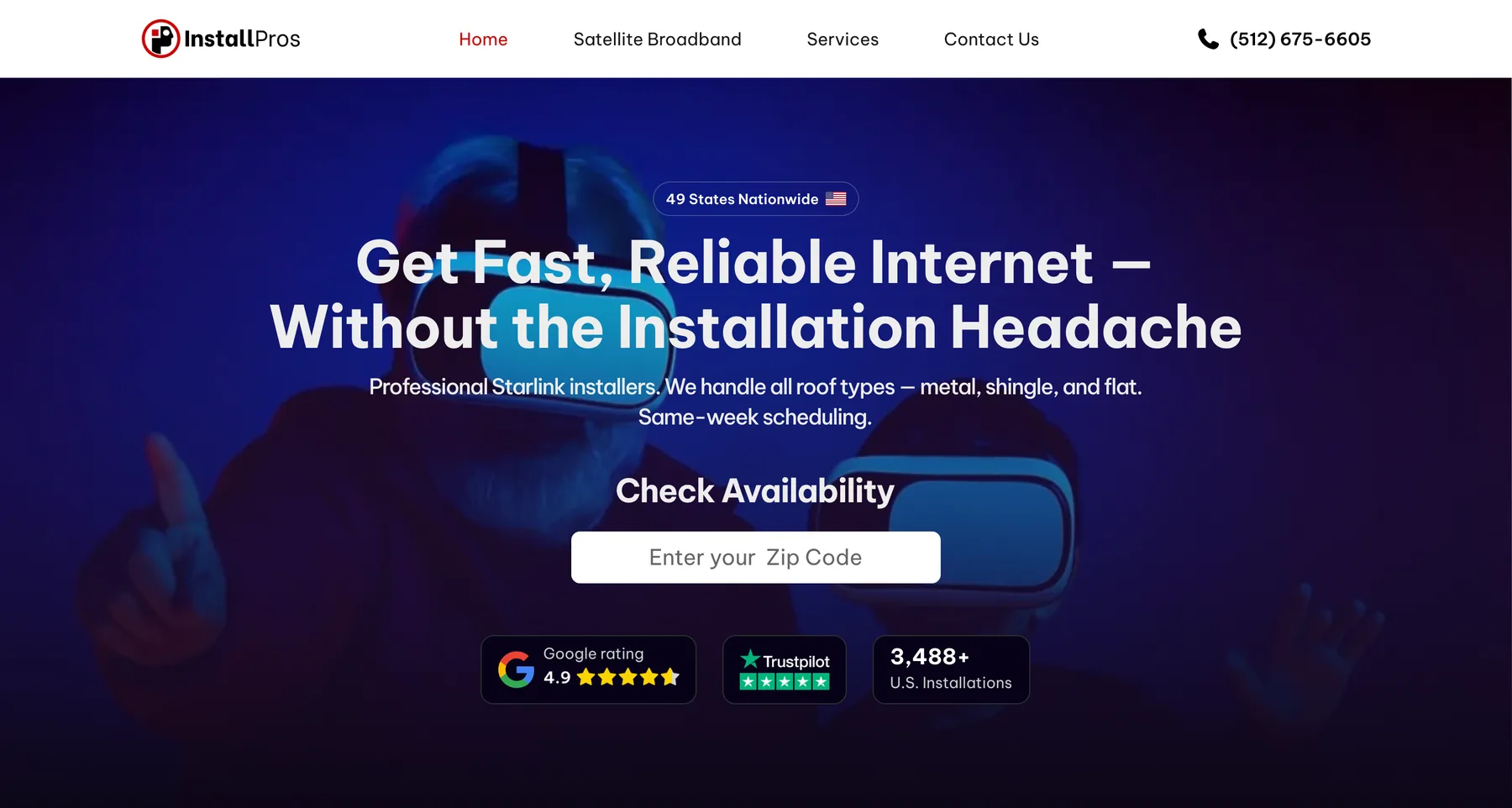
01/04·Hero · Availability check
Design decisions
How the research shaped the page.
Availability checker in the hero
The first thing the page does is answer the first question.
Because customers asked about coverage before anything else, the hero opens on a single positioning line and a zip-code availability check. Confidence about “can you help me?” is resolved in the first screen, before pricing or features are even introduced.
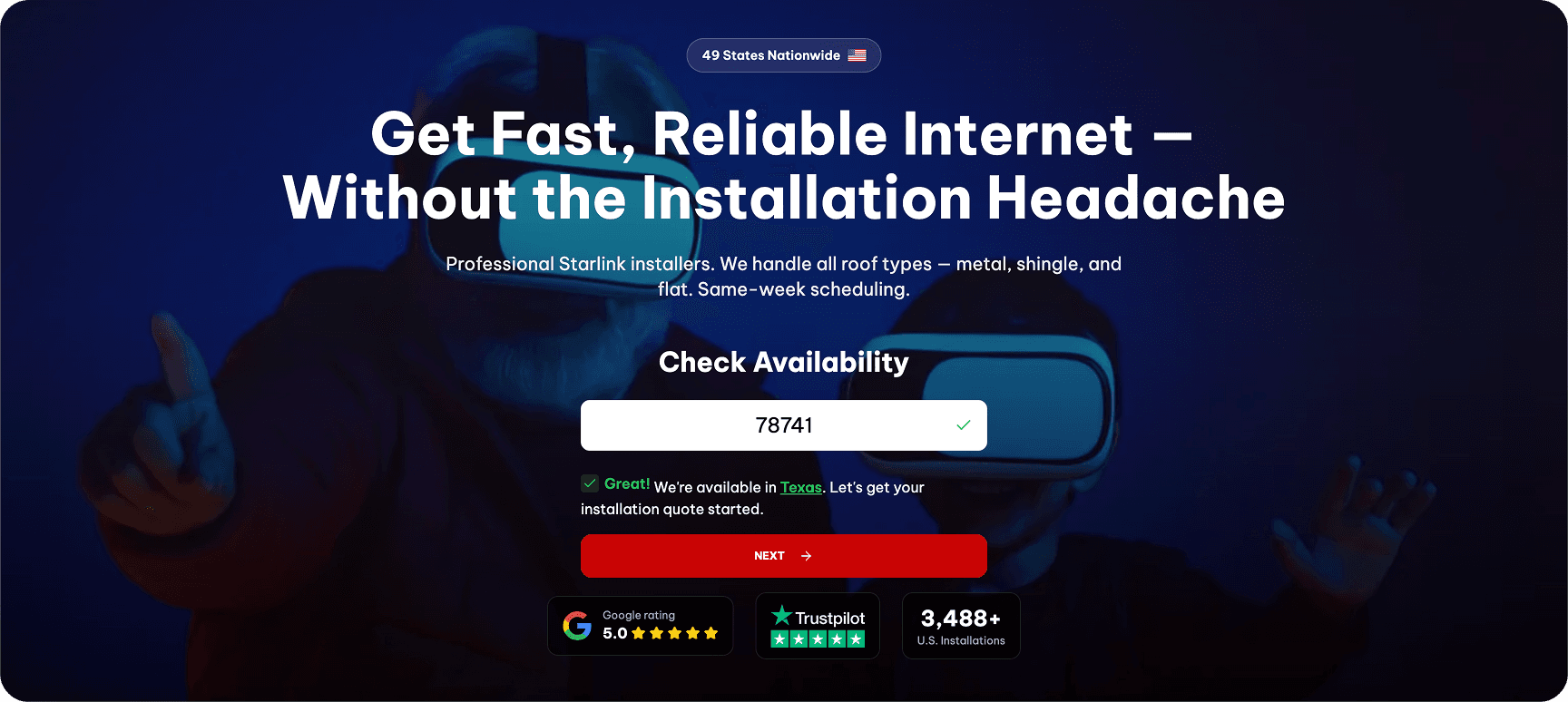
Availability becomes a product response, not just a marketing claim.
Coverage as proof
Show the footprint, then let them check it.
Coverage doubts were answered twice: a national footprint with hard numbers establishes that InstallPros operates at scale, and a “Find My Installer” check turns that claim into a personal, location-specific answer.
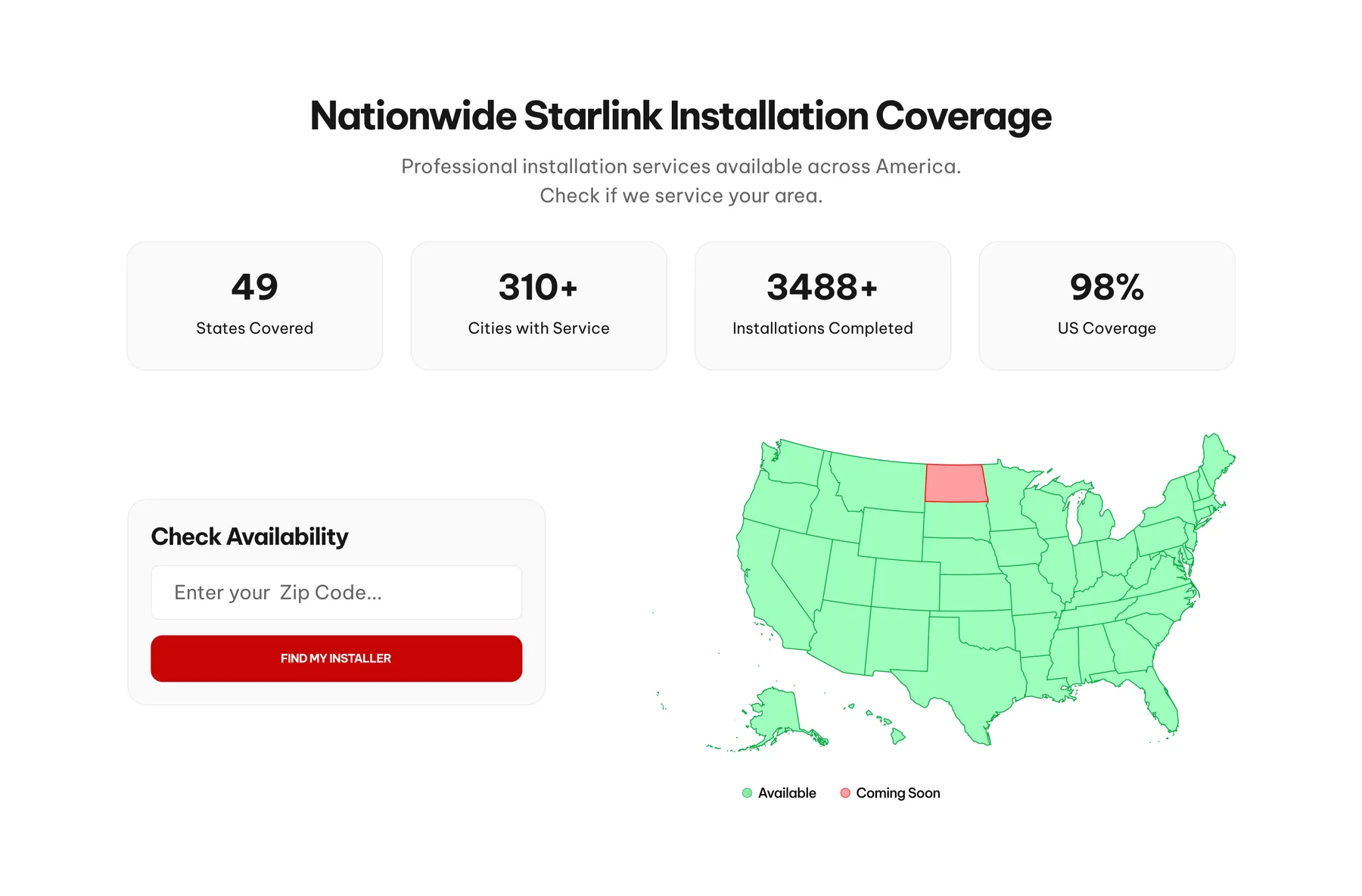
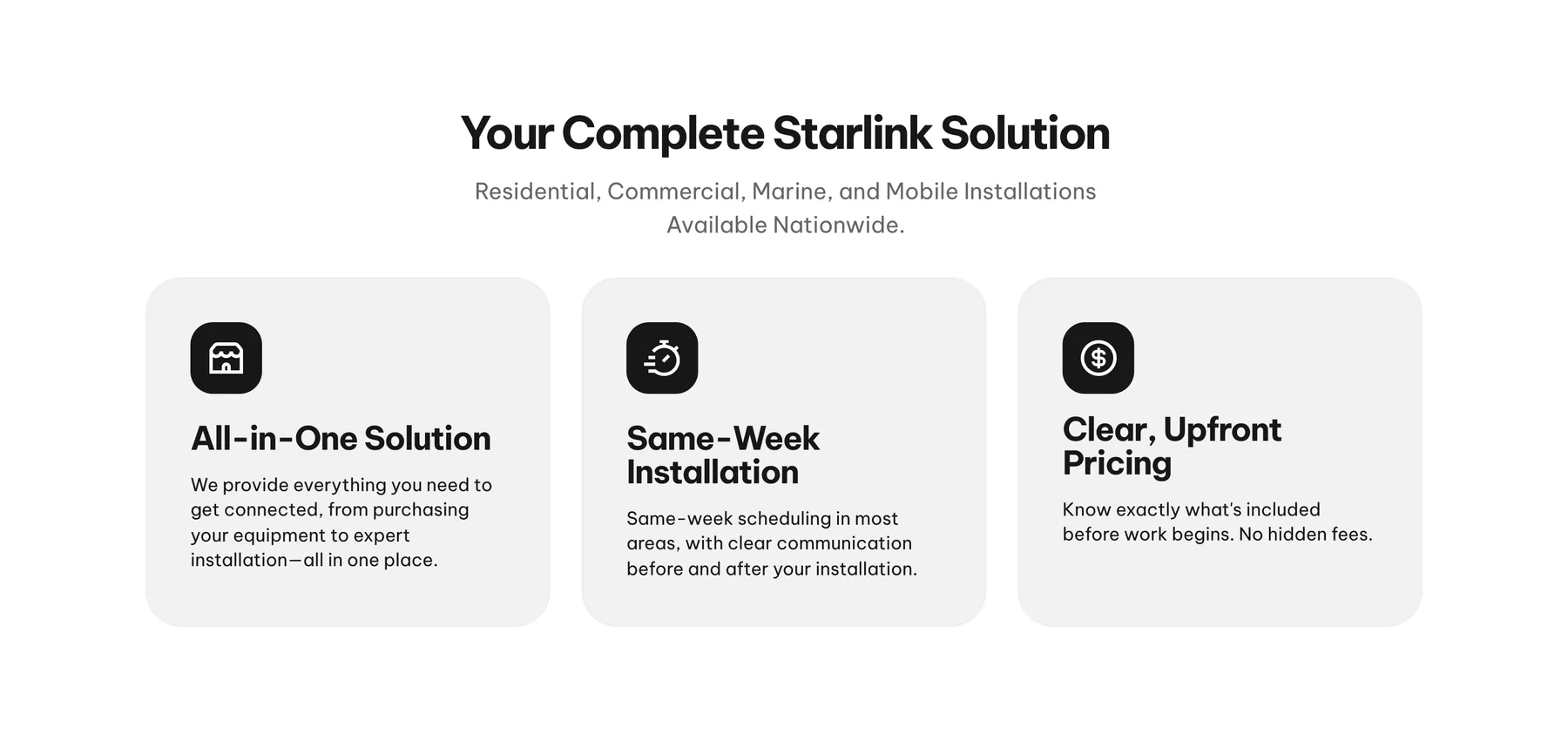
Sell certainty, not speed
Frame the offer as a problem handled end to end.
Service framing leads with an all-in-one, done-for-you promise, same-week scheduling, and clear upfront pricing (the certainty signals the inbox kept asking for) instead of technical performance claims.
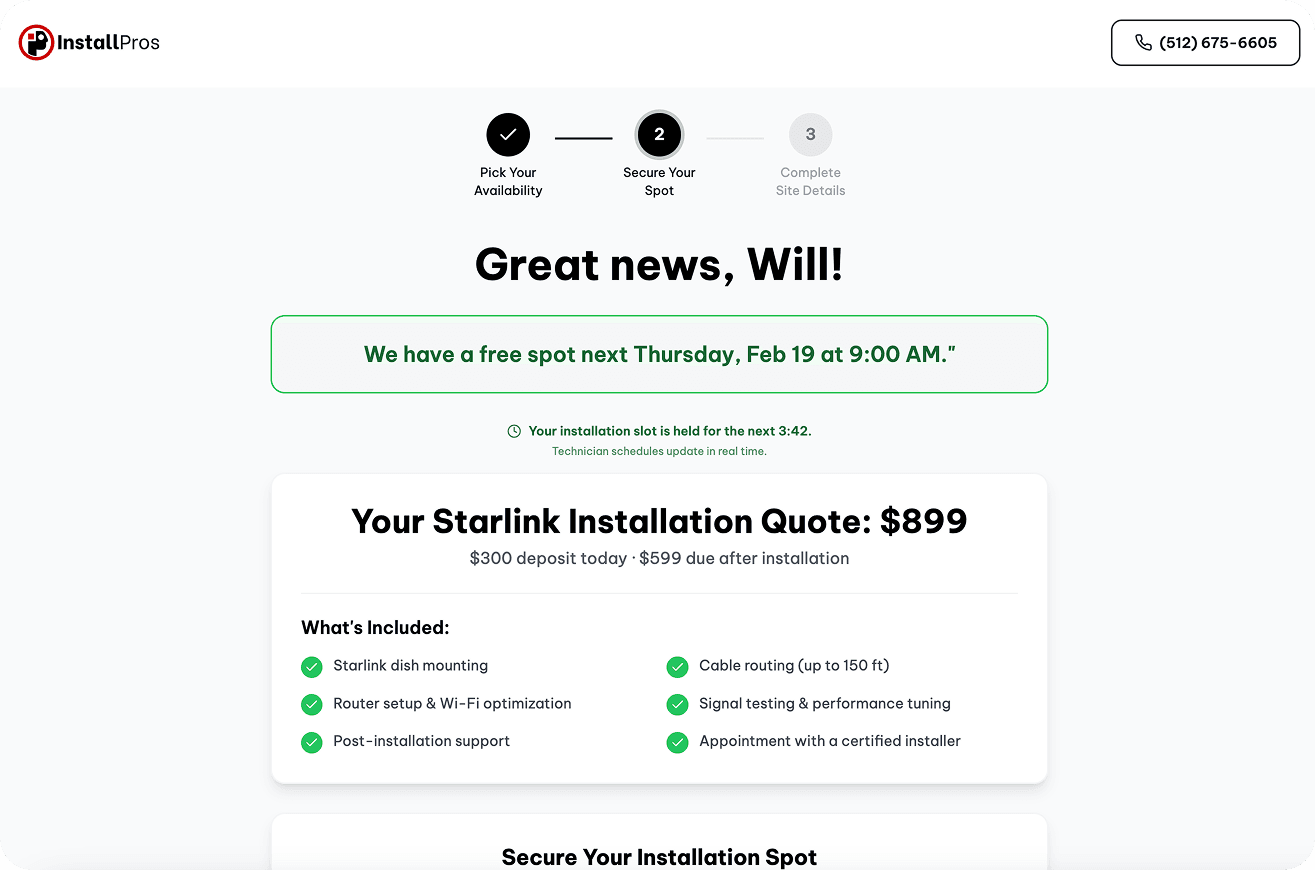
Pricing is surfaced as a concrete answer before commitment, not hidden behind a booking request.
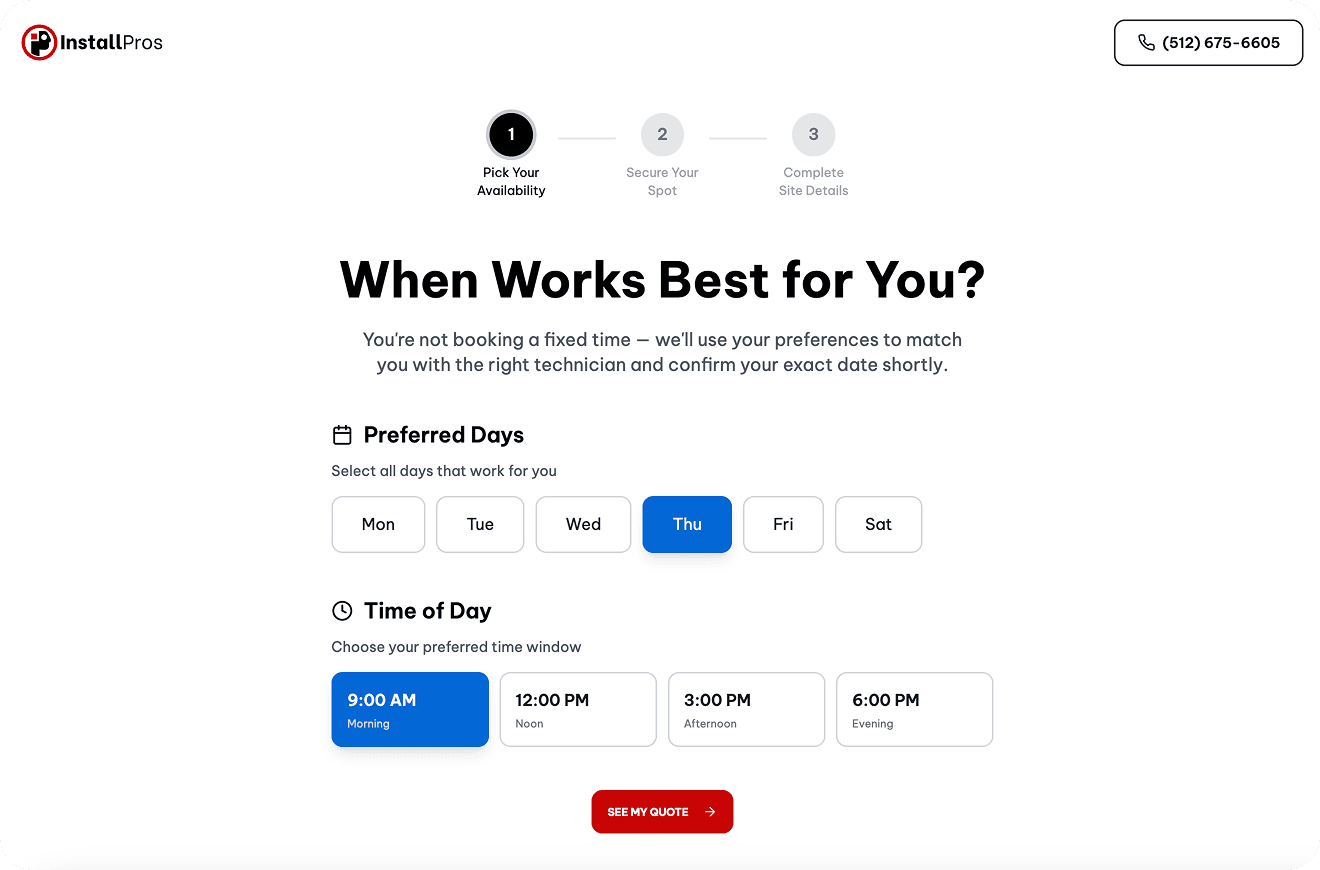
The same research insight continues into the next step: same-week installation becomes a visible scheduling preference flow instead of a vague promise.
Authority before features
Make professionalism the headline.
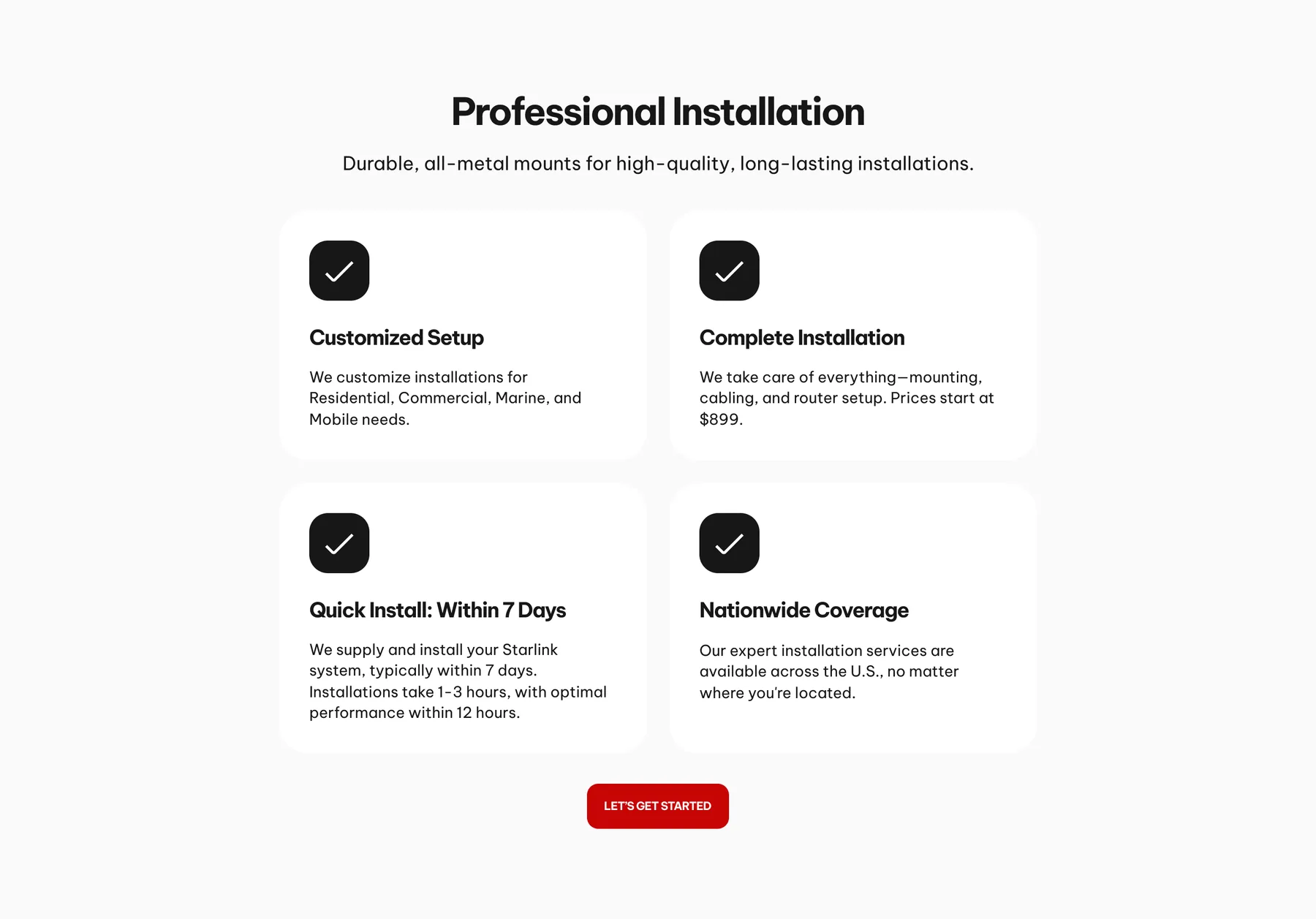
The installation story leads with customized setup, complete installation, and quality of work, positioning InstallPros as the team that does it right the first time. Trust is established before any feature has to do the convincing.
The other market
Two markets, two kinds of evidence.
InstallPros operates in the United States and the United Kingdom, and I design for both. This case is the qualitative half: 300+ support conversations turned into principles, and the site that acts on them. The U.K. is a separate piece of work with a separate problem: a funnel losing two out of three visits before anyone typed a character, diagnosed by crossing four data sources and rebuilt around the one step that was leaking.
What I'd explore next
The work isn't finished. The research pointed past it.
The same conversations that shaped this version also flagged where it can go further. These are the next opportunities I'd pursue.
Pricing transparency
Surface more of the cost picture earlier, so the highest-volume question is answered before the form.
Quote before scheduling
Test a flow that returns an estimate without forcing a booking first: the friction customers named most.
Expectation setting
Show clearly what happens after submitting: who reaches out, when, and what they'll need.
Scheduling visibility
Give a real sense of timing and availability, turning “how soon?” into a visible answer.
Coverage discovery
Make service-area and surface-type checks (roofs, boats, mounts) richer and more self-serve.
Next project
InstallPros · U.K.